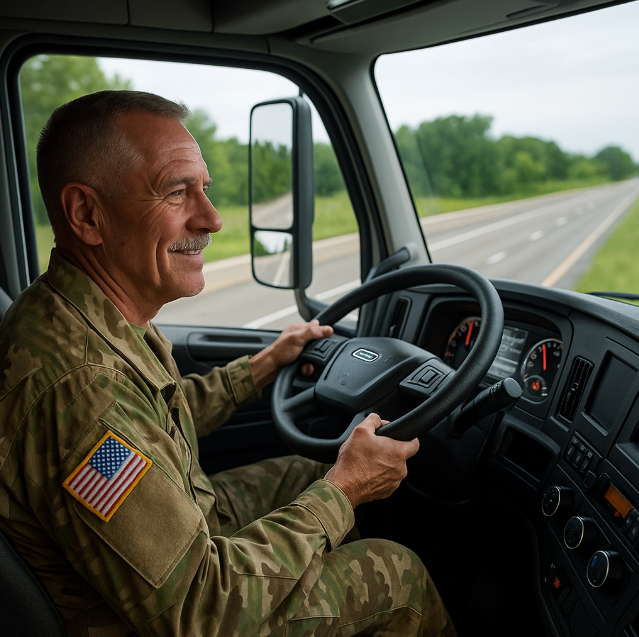
Miles is a virtual home to thousands of former military members and team drivers who are just starting in the industry. The State of Wisconsin is proud to be home to many veterans returning from service and making new lives for themselves.
Veteran driver programs, service-to-trucking transition, and the GI Bill CDL pathway provide organized and supportive paths from military life to a rewarding career as a truck driver. Through specialized veteran driver programs, dedicated mentorship, and financial assistance for the GI Bill CDL pathway, veterans can reduce the time-to-train for a truck driver and quickly start driving real miles on the road. These service-to-trucking transition initiatives fill the critical skill gaps by ensuring that the attributes of leadership and discipline developed in the military translate into safe and professional driving. Leadgamp collaborates with premier carriers and nonprofit partners in order to enhance the veteran driver program’s availability, streamline the transition from military service to trucking, and increase the GI Bill benefit through a clear GI Bill path to getting a CDL.
The Veteran Journey: Service-to-Trucking Transition
Moving from a military career to a civilian one can seem overwhelming—but the trucking sector appreciates the stability, labor morals, and the ability of veterans to work in a high-pressure situation. The focus of the veteran driver programs on the service-to-trucking transition includes:
- Orientation workshops: Provide a brief overview of federal regulations for veterans, introduce trucking terminology, and explain the CDL licensing process.
- Soft-skills coaching: Show how military leadership and communication skills apply to customer service and team collaboration on the road.
- Peer mentorship: Pair new trainees with seasoned veteran drivers who provide on-the-job guidance.
By focusing on the whole person—including practical training, personal development, and mental wellness—these service-to-trucking transition programs ensure that veterans integration into new roles is thriving, and they are ready for any challenges on the road.

Leveraging the GI Bill CDL Pathway
One of the strongest allies for a veteran is the GI Bill CDL pathway. Under the Post-9/11 GI Bill and other VA education benefits, veterans can:
- Cover full tuition and fees for approved truck driving schools.
- Get a monthly housing allowance while they complete their training.
- Utilize a book stipend to fund study materials and supplies.
This financial support renders the GI Bill CDL pathway the main foundation of veteran driver programs, thereby lowering the economic barrier to obtaining a CDL Classes A, B, or C. The partnerships of Leadgamp with VA-approved training centers are the reason that eligible veterans quickly enroll in the program and take the structured curriculum, then hit the road in only 4 to 7 weeks depending on the program.
Leading Veteran Driver Programs in the Industry
Several prominent players in the truck industry have initiated modern and exemplary veteran driver programs that combine classroom instruction with practical hands-on training:
- Melton Truck Lines operates a full-time 24-month VA-recognized flatbed apprenticeship program allowing veterans to upskill and earn GI Bill benefits in the meantime.
- Kenworth and Fastport are sponsors of the Hiring Our Heroes Transition Trucking Initiative, a program that awards veterans grants and the opportunity to win a Kenworth T680 for outstanding service-to-trucking transition success stories.
- Amazon Career Choice has expanded its offerings to include a GI Bill CDL pathway, enabling former service members to train for CDL roles with tuition pre-paid and guaranteed placement within Amazon’s vast transportation network.
These programs clearly demonstrate how a powerful GI Bill CDL pathway can propel a veteran into a stable, high-demand employment.
Mentorship and Support Networks
No veteran will walk the service-to-trucking transition alone. One of the core elements of every victorious veteran driver program is mentorship:
- Peer Trainers: Teach seasoned veterans the nuts and bolts of the trade like secure cargo, log-book management, and route planning.
- Career Coaches: Guide the veterans with long-term plans like resume building, interview preparation, and industry lingo explanations.
- Mental Wellness Allies: Work with nonprofits like Waypoint Vets to organize therapy, peer support groups, and adventure-based healing programs.
In addition to that, Leadgamp hosts monthly virtual meetups to bring learning, motivation, and morale into the lives of trainees and mentors. In our comfort zones, we strive but in discomfort, we grow, Jon Galt stated.
Innovative Initiatives: Miles for Veterans Virtual Challenge
Rolling Strong and Waypoint Vets, along with the Miles for Veterans: Route 66 Virtual Challenge, make a positive intervention in the trucking industry by partnering with truck driver staffing agencies near me. From May 22, 2025 to March 1, 2026, participants will log 2,200 virtual miles along the historic Route 66, with many of them being current and future veteran drivers. The initiative:
- Encourages partnerships and sponsorships, with social media advocacy—including Leadgamp’s participation—aimed at increasing program visibility and benefits for all.
- Empowers veterans through Waypoint Vets adventures, connecting mental and physical health with the driver program.
- Traces the path between past and present by honoring Route 66’s legacy, highlighting modern trucking programs, and celebrating the service-to-trucking transition.

Case Study: Melton Truck Lines Military Pathways
Melton Truck Lines stands as a model that illustrates how a trucking company can seamlessly embed the GI Bill CDL pathway within its veteran-focused strategy. The foundational elements are:
- Dedicated Military Team: Connects the dots between VA benefits, GI Bill approvals, and program enrollment.
- Veteran Resource Group: Initiates peer support, mentorship, and advocacy within the company.
- Flatbed Apprenticeship: A 24-month GI Bill-eligible training program that blends yard drills, on-road practice, and specialized flatbed operations.
Today, veterans make up 30% of the workforce at Melton with 50% lower turnover and miles driven safely and effectively for years. The virtues that veterans contribute to leadership—resilience, mission focus, and adaptability—correlate with high customer satisfaction and operational excellence.
Miles of Good: Pilot’s Positive Change Initiative
Beyond the training and placement aspect, Pilot Travel Centers “Miles of Good” corporate giving initiative showcases another dimension of veteran driver programs. Through:
- Safety: Funding road-safety education and on-site wellness clinics.
- Education: Sponsoring STEM scholarships and skill-development courses.
- Veterans: Supporting transition workshops, job fairs, and GI Bill outreach.
Pilot’s activities magnify the GI Bill CDL pathway and the service-to-trucking transition programs, ensuring that veterans receive both the technical training and community support necessary to succeed behind the wheel.
Building Sustainable Careers: Best Practices
To reap the benefits of veteran driver programs, carriers and training partners need to:
- Streamline GI Bill Access: Assign VA benefit coordinators to fast-track veterans through the GI Bill CDL pathway.
- Integrate Mentorship Early: Pair recruits with veteran ambassadors from day one to foster belonging and confidence.
- Leverage Data: Track metrics like time-to-certification, retention rates, and miles logged to refine programs.
- Cultivate Wellness: Offer fitness challenges, mental health resources, and peer support through nonprofit partnerships.
- Highlight Career Progression: Showcase success stories—from warehouse to highway—to illustrate the tangible rewards of a service-to-trucking transition.
Leadgamp’s all-in-one solutions not only facilitate but also hasten the implementation of these activities, while the use of industry data and veterans feedback makes them responsive and impactful.
Finale
The path from military to miles is half-way crossed by specialized veteran driver programs, the smooth routing process, and the transformative effects of the GI Bill CDL pathway. Rigorous training, strategic partnerships, and mentored veterans—together with Leadgamp, Melton Truck Lines, and Pilot pushing the agenda forward—make it possible. Past Route 66, which was the embodiment of destiny and independence, today’s veteran driver programs function as lighthouses for America’s heroes on the open road.